What Is A Permit To Work System? Why It Is Important?
Operational settings, especially in regulated industries like life sciences and advanced manufacturing, entail tasks that are intrinsically highly risky. These activities, ranging from essential electrical maintenance to the execution of a hot work p...
EHS 4.0: Discover How It’s Transforming Quality and Safety
The pressure to demonstrate both GxP compliance and environmental stewardship has never been higher, necessitating a Digital Transformation EHS overhaul.
Industry 4.0 is here, and it is time that safety and quality systems keep pace with the mo...
Return Merchandise Authorization (RMA): What You Need to Know
It is inevitable for every company to deal with a return at some point in time. A customer might have a product that didn't work as intended, was delivered damaged, or was just not the right fit. The simple-looking request, however, hides a complic...
How to Automate Vendor Qualification Process with an EQMS?
The pressure on quality teams to ensure supplier adherence to complex, evolving GxP and ISO standards has reached a critical point. Imagine eliminating weeks of paper shuffling, chasing signatures, and inconsistent scoring—that's the power of automat...

Cost of Non-Conformance in Life Sciences that You Need to Know
The life sciences industry is a sector where winning equates to being exact, safe, and following the rules. It is an area where errors, even the tiniest ones, are very costly. Non-conformance is not just a matter of increased documentation in the cas...

Supplier Collaboration Strategies & Benefits You Need to Know
In life sciences and manufacturing, the integrity of your final product is only as strong as your most vulnerable external link—your weakest point of Digital Supplier Oversight.
Today's global supply chain is intensely complex, burdened by regul...
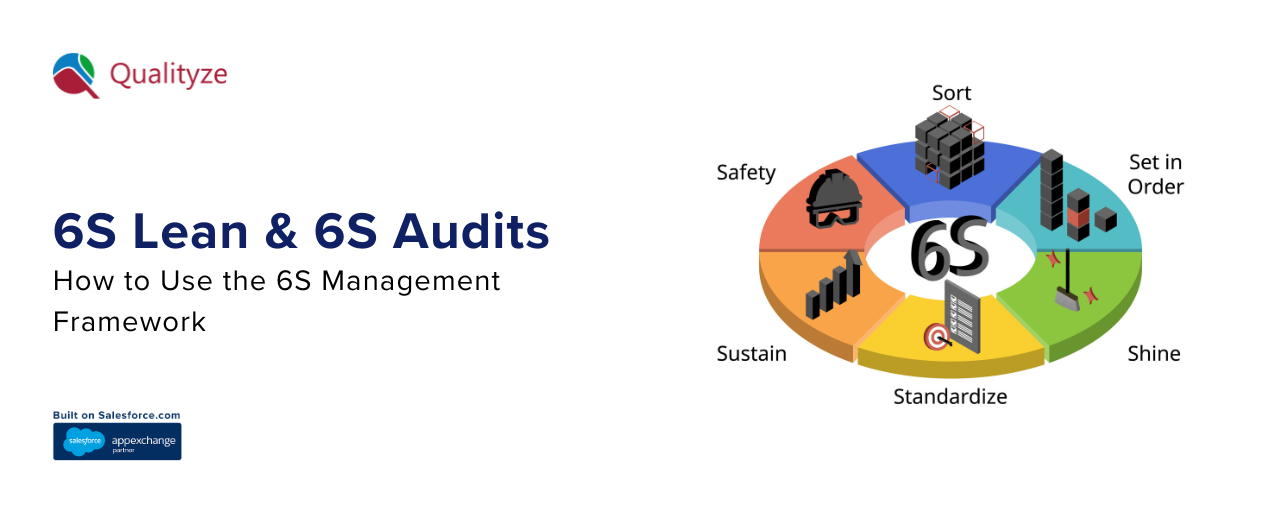
6S Lean & 6S Audits: How to Use the 6S Management Framework
The 6S framework basically consists of six simple yet effective ideas: Sort (Seiri), Set in Order (Seiton), Shine (Seiso), Standardize (Seiketsu), Sustain (Shitsuke), and Safety (the sixth "S"). If it is used properly, it changes messy working areas ...
What Is Digital Watermarking and Why It Is Important in QMS
In modern quality management, the integrity and security of documentation are paramount, especially for regulated industries. As organizations transition to digital processes, the vulnerability of Electronic Record Management to unauthorized access o...

Supplier Performance Management (SPM): How to Optimize It?
In today’s hyper-connected global marketplace, the effective management of vendor relationships—known as Supplier Performance Management (SPM)—is no longer a procurement of luxury, but a non-negotiable quality imperative. For manufacturers in highly ...
How To Design QMS Workflow For Manufacturing Company?
Digital transformation has hit the factory floor, yet many quality systems lag behind. Learn how expert QMS Workflow Design for Manufacturing can bridge this gap and turn compliance into a competitive edge.
In the demanding world of production, ...
How To Manage Pharma Recalls With Track-and-Trace Solutions
The pharmaceutical supply chain is a web of risk; only robust pharma recalls track and trace solutions can offer the necessary visibility and control required to manage it.
In the high-regulated life sciences environment, how well your pharma re...

Quality Culture Vs System: Why Both Are Essential
Every organization striving for operational excellence eventually faces one central truth — a Quality Management System (QMS) alone cannot guarantee quality without a strong Quality Culture to sustain it.
In the pursuit of compliance and efficie...
Case Studies of QMS Failures and Recovery You Need to Know
In regulated sectors, a quality management system is the pillar of patient safety as well as business sustainability. Grasping the dynamics of QMS failure and recovery is the initial step toward constructing actual resilience.
A solid QMS is the...

QMS Challenges & Solutions In Industries You Need To Know
The promise of a modern eQMS is efficiency, speed, and bulletproof compliance. The reality? Many organizations crash into critical QMS Implementation Challenges that turn a digital upgrade into a digital nightmare. We move beyond generic advice to ex...
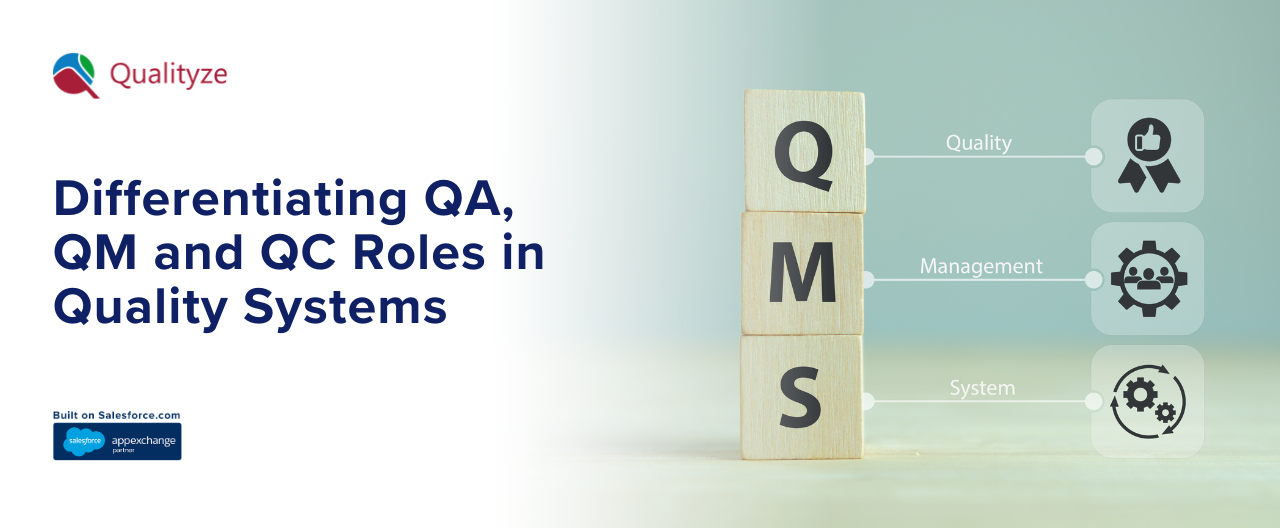
Quality management Vs Quality control Vs Quality assurance
In the life sciences, medical devices, and manufacturing sectors, the effectiveness of your Quality Management System is directly proportional to your ability to achieve Regulatory Compliance.
How Quality Management vs. Quality Assurance vs. Qu...
The Best GMP Labeling Practices for Quality Manufacturers
Every Quality Assurance professional knows that effective GMP labeling is a primary defense against product recalls. The complexities of global supply chains make rigorous traceability in labeling more critical than ever before.
There is no room...
Market Withdrawal Vs Recall: What You Need To Know
In regulated industries, the specter of a crisis event is the greatest threat to public safety and corporate survival. For Pharmaceutical and Medical Device manufacturers, protecting the integrity of each unit is paramount. Compromise can lead to hea...

Major Vs Minor Vs Critical Non-Conformities You Need to Know
Every quality management system (QMS) is designed to handle deviations. But not all deviations are created equally. The difference between minor documentation errors and a systemic gap in a critical process determines the speed, scope, and resources ...
CE Compliance Certificate and Marking: What You Need to Know
In the fiercely competitive global marketplace, CE Marking Compliance is never just an administrative step—it’s the mandatory passport that grants your product entry to over 30 countries. For every manufacturer dealing in medical devices, electronics...
Healthcare Compliance Laws and Regulations You Need to Know
The sheer volume of new regulations, coupled with aggressive enforcement, has placed Healthcare Compliance Laws at the top of every executive's priority list. This complexity requires a shift from reactive measures to proactive, systemic compliance. ...

What is Requirements Traceability? Why It Is Important?
For Quality and Engineering managers, the pressure to meet stringent Design Controls while maintaining agility is immense. The bridge that connects these two worlds is a well-managed system for Requirements Traceability, ensuring every decision is ba...

Free QMS vs. Paid QMS: The Truth Behind the “Free” Label
Many small and mid-sized businesses, driven by lean budgets, initially gravitate toward Free QMS solutions, unaware of the inevitable upgrade path. The search volume for "Quality Management Software" with a "free" modifier reveals a universal desire ...

Computer System Validation (CSV): What You Need to Know
Every FDA audit starts with one question: is your computer system validation robust enough to prove reliability? For life sciences, medtech, and pharma companies, computer system validation is the invisible backbone of compliance.
Without it, or...

Free QMS Tools Exposed: True Cost of Compliance and Quality
Every business has that moment. Budgets are tight, the team is juggling priorities, and someone says, “Why don’t we just use the free version?” It sounds reasonable. After all, why spend thousands of dollars on a Quality Management System (QMS) when ...

How to Conduct Quality Audits and Why They Are Essential
Most individuals don't especially get thrilled when they hear the term audit. It usually brings to mind endless checklists, clipboard-wielding examiners, and maybe a bit of nervous sweating. But a good audit is something to be adopted—it's one of the...

Why Communication in Supply Chain Management is Important?
The supply chain is the circulation system of a contemporary business, and like any other system, it needs uninterrupted, clean, and continuous flow to work at maximum efficiency. In a world characterized by global sourcing, JIT delivery, and strict ...
What Is Incoming Quality Control? Why It's Important?
The start is always the most important step in the case of product quality. Incoming Quality Control (IQC) is exactly the first defense system—where the quality assurance begins. In simple words, IQC is the process of inspection and verification of r...
OSHA Hazard Communication (Hazcom): What You Need to Know
The OSHA Hazard Communication Standard (HCS) is really the regulation handbook that makes workers fully aware of which chemicals they're handling and how to protect themselves from them. Consider it a national pact between employers and employees: if...

Consequences of Poor Training Management and How to Avoid It
Manufacturing is a high-stakes business where the smallest gap in knowledge can have a ripple effect throughout quality, safety, and compliance. Think about it—employees aren't going to follow a standard operating procedure (SOP) or operate equipment...
The Best EHS Software That Grows with Your Team
Workplace safety has never been more important, yet in the modern business environment, it is also more complex than ever. From compliance requirements to changing patterns of the workforce, organizations are facing increasingly difficult times putti...